Virtual Running Challenges With Friends (That People Actually Finish)
A virtual running challenge is a race without a start line: a goal, a time window, and an app doing the timekeeping while everyone runs wherever they are. In 2026 the idea comes in three flavors — challenges you buy (a medal arrives in the mail), challenges you share (a leaderboard among friends), and challenges you stake (real money that makes quitting expensive).
Most guides pretend those are the same product. They aren't — they fail in completely different ways. Here's the honest landscape, then the 3-step recipe for running one with friends that actually gets finished.
What a virtual running challenge actually is
Strip away the branding and every virtual challenge — from a charity 5K to a month-long team mileage war — is the same four parts. You and your friends agree on a goal, give it a deadline, pick how runs get proven, and decide what's waiting at the end. The apps differ only in which parts they take seriously.
That last part is the whole game. A challenge with nothing at the end isn't a challenge — it's a spreadsheet. The three formats below are really three answers to "what happens if I stop showing up?"

Where your money (and motivation) actually goes
Every virtual running challenge on the market is one of these three. None of them is a scam — but only one of them is designed around the moment you want to quit.
Paid medal challenges
Pay roughly $30–$40 per challenge, pick a famous route (Route 66, Mount Fuji), and your logged miles move a pin along a map until a chunky medal ships to your door. Any activity counts, and manual entries are allowed — nothing checks your miles but your conscience.
Honest read: it's solo motivation plus souvenir hardware. Pleasant, real, and completely consequence-free — stop running and the only thing that happens is nothing.
App group challenges
Strava lets you spin up a private challenge — most distance, or everyone chasing a goal — with up to 199 people who follow you. Miles come from real GPS activities, so the scoreboard is honest.
Two catches. "Free" has an asterisk: creating one is a subscriber feature, and joining generally takes a subscription too. And when you fall behind, the only penalty is muting the thread — which is exactly what everyone does by week three.
Stakes challenges Ours
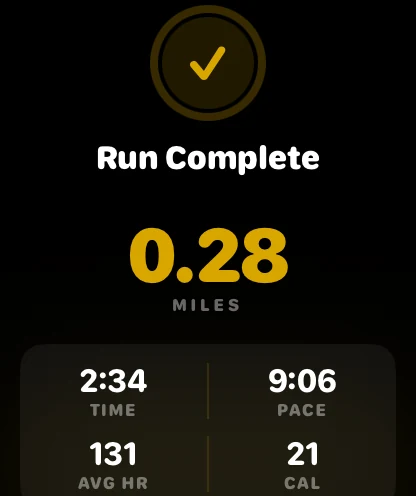
Everyone puts real money in a pot; every mile is verified on your Apple Watch — GPS route plus heart rate, manual entries blocked. Hit the goal (or run the most) and you collect. Skip your runs and your stake goes to the friends who didn't.
We make this one, so discount our enthusiasm — but the mechanism isn't ours: stakes are the oldest finishing technology there is. The app just moves the money honestly, through Stripe.
| Format | What it costs | Miles verified? | If you quit |
|---|---|---|---|
| Paid medal challenge | ~$30–$40 per challenge, medal included | No — manual entries allowed | Nothing. The medal waits forever. |
| Strava group challenge | Strava subscription for most people | Yes — GPS activities | You sink down a leaderboard nobody checks. |
| RunMatch stakes challenge (ours) | Free app — you choose the stakes | Yes — Apple Watch GPS + heart rate | Your stake pays the friends who kept running. |
How to run a virtual challenge with friends — 3 steps
This works in any of the three formats above. The difference is how much of it the app does for you.
Pick a game everyone can win
"Most miles" is only fair between equals — the marathoner wins on day one and everyone else checks out. Mixed group? Have each runner set their own weekly target, or race first-to-X with handicaps. Keep the window short: one week beats one month.
Make proof automatic
The moment anything is on the line, screenshots get cropped and "treadmill miles" get generous. Use GPS sync from a watch or phone and ban manual entries up front. If the app verifies for you, this step costs nothing.
Put something real at the end
A group chat congratulation is not a consequence. Stake actual money — $10 to $25 each is plenty — winner takes the pot, or quitters fund the finishers' race entries. The stake isn't the prize; it's the reason week 4 happens.
How RunMatch runs the whole thing for you
RunMatch is the three steps above as an app. You create a challenge, set the buy-in, invite your friends, and it handles the parts that break group challenges by hand:
- 1Verification is GPS, not vibes. Runs sync from your Apple Watch; manual entries are blocked and pace limits catch bikes and cars.
- 2Race for a pot, or stake your own goal. Winner-takes-pot with friends — or solo accountability stakes where money you risk goes to a recipient you choose if you quit. Nobody profits from your failure except someone you picked.
- 3The money rails are boring on purpose. Payments run through Stripe, balances sit in your account until settled, withdrawals go out via Stripe Connect. The full mechanics are on our "is this legit" page — a question you should ask of any app holding a pot.
Two ways to run a virtual challenge that actually pays
Race your friends
Everyone puts real money in a pot and runs wherever they are. Most miles or first to the distance takes it, verified on Apple Watch.
Bet on yourself
Or stake your own goal. Hit it and you keep your stake; miss it and it goes to someone you picked. No medal, no honour system.
- $21.14average one-day win
- $10median win
- $740biggest pot so far
Common questions
A virtual challenge your friends can’t quietly quit.
Free to set up, 0% of the pot, and every mile verified on Apple Watch. Run your first verified mile and we’ll pay you $10.
Get RunMatch on iOS- Payments via Stripe
- GPS + heart rate on Apple Watch
- Withdrawals via Stripe Connect
One $10 first-mile reward per new account · 18+ · iPhone and Apple Watch required · Terms apply