Race your friends
Everyone puts in the same buy-in and runs. Most miles, first to a distance, or the longest streak takes the whole pot — RunMatch keeps none of it.
The awkward fact first: the app everyone assumes is the answer — Strava — now puts group challenges behind its subscription, and everyone who joins needs one too. Here are nine apps that let a group of friends compete, what each one costs in 2026, and the only one where the leaderboard pays out.
9 apps · cost, tracking, verification and payout · no affiliate links
Pick by the group you actually have, not the one you wish you had.
Strava group challenges. Cleanest experience if the subscription doesn't bother anyone — but check first, because every single person who joins needs one too.
StravaNike Run Club. Genuinely free friend challenges with a friends-only leaderboard, and the guided runs are better than they have any right to be.
Nike Run ClubMiles With Friends or Stridekick. Both convert walking, cycling and gym work into a common unit so the non-runners can still lose fairly.
Miles With FriendsRunMatch. A leaderboard nobody checks is not accountability. Money that leaves your account on Sunday is.
RunMatchFour columns, because those are the four things that decide whether a challenge survives to Sunday. Verification is the one nobody checks before they start and everybody argues about afterwards.
Pricing for Strava, Nike Run Club, Stridekick and MapMyRun re-checked 17 September 2026. Taken from vendor pricing pages, vendor help centres and live App Store in-app-purchase listings, not from review sites. Where an app has several live price SKUs or no publishable first-party figure, we print a range or nothing rather than a number we can't stand behind. Found something wrong? Tell us and we'll correct it.
There is exactly one app on this list where finishing pays and quitting costs, and we make it, so read this section with that in mind.
RunMatch works the way a bet between friends works. Everyone puts the same amount into a pot — $5, $20, whatever the group will actually tolerate — and picks a format: Race (first to a target distance), Most Miles (highest total over a week), or Streak (hit a daily target every day or you're out). The winner takes the pot. RunMatch takes none of it; the only fee is 3% when you move money out.
The solo version is the more interesting one. You stake money on your own goal, and if you miss it the money goes to a recipient you named in advance — your training partner, your sister, a friend who will be insufferable about it. It doesn't go to us. That distinction is the whole design: nobody profits from your failure except someone you picked.
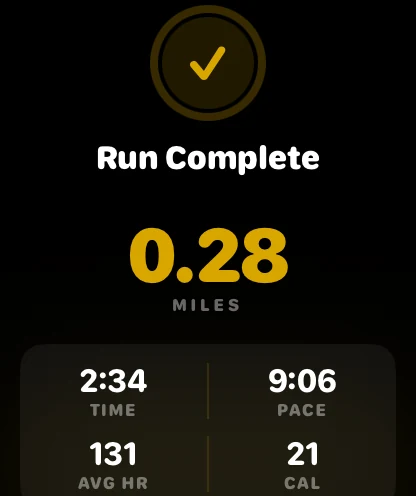
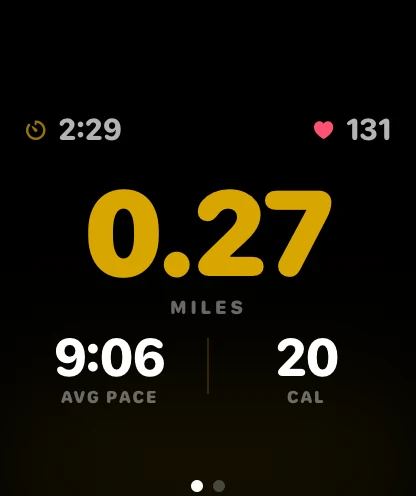
What it needs, plainly: an iPhone and an Apple Watch. There is no Android, Garmin, Fitbit or Wear OS version, and a run submitted without Apple Watch heart-rate data is rejected by the server. If half your group is on Android, stop here and take Nike Run Club instead — that's a real answer, not a brush-off.
Eight apps where the prize is a leaderboard position. That's not a criticism — for plenty of groups it's exactly enough.
Still the social layer of running — segments, clubs, the feed, and the place your friends already are. But know what you're buying: group challenges now require a subscription, for the person who creates it and for every person who joins. Free accounts can still join Strava's own sponsored challenges, just not yours.
The best fully free answer, and it isn't close. Create a distance challenge, set the dates, share it with whoever — no paywall anywhere, plus a friends-only leaderboard and guided runs that are genuinely good company. The trade-off is that it's Nike's ecosystem and it wants to stay that way.
Challenge-first by design: leaderboard, streak, target and team modes, and it syncs almost any tracker, so a group split across Fitbits and Apple Watches still works. Free covers public challenges up to 10 people for 7 days; private challenges and longer events need a paid organiser plan, though only the organiser pays.
Long-running tracker with a large challenge library and route sharing that's genuinely useful if your group runs in the same city — now published by Outside, not Under Armour. Challenges lean toward joining existing ones rather than building a tight private competition, and the free tier carries ads.
Formerly Runtastic. Monthly distance goals, group challenges, virtual races and live cheers from friends while you're out — the most explicitly community-shaped app here after Strava. Challenges are on the free tier; Premium adds plans and deeper stats.
The scrappy free option: private group challenges from a share link, and around 70 activity types converted into mile-equivalents so the cyclist and the swimmer in your group can lose fairly. It runs in a browser, which is either the feature or the dealbreaker. Manual entry is allowed, so it's an honour system.
The only one here that does live racing: you and a friend start at the same moment and watch the gap move in real time, with chat for the trash talk. Brilliant for two people, awkward for eight, and everyone needs an iPhone.
The wildcard. Not a challenge app in the invite-your-friends sense — it carves the world into map tiles and you collect every tile you run through, syncing straight from Strava. Competitive in a way that rewards exploring instead of grinding the same loop, which is a better game than it sounds.
Nobody worries about this until the first time someone's weekly total jumps by fifteen miles on a Thursday.
Here is the hierarchy of evidence, worst to best. Manual entry is an honour system with extra steps — Miles With Friends allows it, and it's fine right up until the moment the challenge matters. Phone accelerometer step counts can be produced by a washing machine, a dog, or a $12 phone-shaker sold specifically for the purpose. GPS alone looks rigorous and isn't: a location-spoofing app draws a perfect 10K, and a bicycle draws a real one.
Heart rate from a watch on your wrist is the first rung that's genuinely awkward to fake. You can spoof where you were. Producing 150 bpm for forty minutes while sitting down is harder.
Eight of the nine apps here stop at the third rung. That is fine until there is money on the result.
HTTP 400
{
  "error": "Heart rate data from Apple Watch is required to verify the run",
  "code": "NO_WATCH_HR"
}
That's the actual rejection, not a marketing paraphrase. Runs also fail on a sub-4:00/mile pace floor, a heart rate outside 40–220 bpm, fewer than ten GPS points, a duplicate route, or a workout more than 24 hours old.
The cost of that strictness is honest and worth stating: it rules out every Android phone, every Garmin, every Fitbit, and treadmill runs that your watch didn't record. We decided a competition with money in it should reject a real run occasionally rather than accept a fake one ever. If your challenge is for bragging rights, that trade is a bad deal and you should take a GPS app.
Numbers from our own competitions, including the unflattering one.
The median is the number that matters. A $10 median beside a $21.14 average tells you the distribution is skewed: most competitions are four friends and a twenty, and a handful of large ones drag the mean upward. Anyone quoting only the average is hiding that, and the $740 is more believable once you can see the shape of the rest.
Set against the walking-rewards apps, it is a different category of money entirely. Sweatcoin's own help centre states that sweatcoins cannot be cashed out to PayPal or a bank at all — they buy marketplace offers — and Sweatcoin publishes no fixed dollar value for one. Evidation caps walking at 8 points a day, and 10,000 points is $10, so a month of walking earns about 24 cents. A $10 median for winning one week of a running competition is not a living either. It's a dinner, and a reason to leave the house on a Tuesday.
Whichever app you pick, the design of the challenge matters more than the software. Four rules, learned from watching group challenges die:
A solo running goal has exactly one person who knows whether you kept it, and that person is extremely good at negotiating with you. A group challenge changes the arithmetic: skipping Tuesday stops being a private decision and becomes a visible one. That's the entire mechanism, and it's why challenge features exist in apps that otherwise have nothing in common.
It also explains the usual failure. Most group challenges collapse in the second week, and not because anyone got injured — because the leaderboard stopped being read. Visibility only works while people are looking. A notification nobody opens is not accountability, it's just a notification, which is why the apps in this list that do nothing but rank you tend to work brilliantly for a fortnight and then quietly stop.
What survives longer is a challenge with a settlement date and a consequence attached to it — even a trivial one. The loser buys coffee. The winner picks Saturday's route. Money, if the group is comfortable with money. The specific stake matters much less than the existence of a moment where the challenge resolves and somebody has to pay something, because that moment is what people actually schedule their Tuesday around.
Monthly ideas once the group has one week behind it: a mileage ladder where each week's target rises 10%, a "no zero days" streak where a one-mile walk counts, a longest-single-run competition that stops the high-volume friend running away with it, or a route-variety challenge where repeating a route scores nothing.
If you want the group's weekly runs to become a standing thing, the run club playbook covers turning a loose group into something with a calendar, and running competitions covers the three formats in more depth. If the challenge is really a race in disguise, give the group a shared target: the 10K training plans work for people who already run, the couch to 10K plan works for the friend who has never run a mile, and the half marathon plan is there when somebody gets ambitious. Still choosing an app? We compare the Apple Watch running apps and what every free tier withholds separately. If the group is a club rather than a few friends, the run club app page covers formats and buy-ins, and fun running apps covers which mechanics still work in week six.
Everyone puts in the same buy-in and runs. Most miles, first to a distance, or the longest streak takes the whole pot — RunMatch keeps none of it.
Or stake your own goal. Hit it and the money stays yours; miss it and it goes to a friend you picked, so someone is holding you to it.
Free to download, free to race your friends, 0% of the pot. Run one verified mile and we’ll put $10 in your wallet — then set the stakes for the group.
Get RunMatch on iOSOne $10 first-mile reward per new account · 18+ · iPhone and Apple Watch required · Terms apply