
Race your friends
The whole club stakes the same buy-in and runs. Race, Most Miles or Streak — the winner takes the entire pot, and RunMatch keeps none of it.
Most clubs already have a leaderboard. What they do not have is a reason for anyone to look at it on a Thursday. Everyone puts in the same buy-in, runs for a week, and the winner takes the pot — and the club pays nothing, because RunMatch takes 0% of it.
Groups of 2 to 200 · free to set up · 0% of the pot
Almost every club app solves the wrong problem. Clubs rarely struggle to record runs — everyone already has something doing that. What they struggle with is the middle of the week.
A club challenge dies in a predictable way. It launches on Monday with enthusiasm, the group chat is busy for two days, and by Thursday nobody has opened the leaderboard. Nothing is at stake, so there is nothing to check.
That is the whole brief, and it is why this page exists rather than another tracker.
| Format | How it settles | Best club for it | Watch out for |
|---|---|---|---|
| Race | First member to hit a target distance takes the pot. | Small clubs with similar paces. | One fast member winning every week. |
| Most Miles | Highest total over the window, usually a week. | Mixed-ability clubs of any size. | Rewards free time as much as fitness. |
| Streak | Hit a modest daily target every day or you are out. Last one standing wins. | A first club challenge, at any size. | Set the daily target low — lower than feels right. |
If your club has never done this, run a Streak and set the daily target at something almost embarrassingly modest — a mile, or twenty minutes. The point of a first challenge is that most of the club finishes it, not that it separates the strong from the weak. You can raise the bar once everyone has had the experience of winning something.
The buy-in decides whether anyone checks the leaderboard, and clubs consistently set it too low.
Five dollars across twelve members makes a $60 pot, which is a nice gesture and changes nobody’s Thursday. Twenty dollars makes a $240 pot and changes everyone’s. The number that works is the one members would be mildly annoyed to lose — for most groups that is $10 to $25.
Nobody is out of pocket for being slow. Worth saying at the launch, because it is the first objection: in a pot format every member stakes the same amount and the winner takes it, so the cost of finishing last is exactly the buy-in. It is a sweepstake, not a fine.
And there is no club float to manage. Each member stakes individually from their own balance, so the organiser never collects, holds or chases money.
Worth showing plainly, because the first question from any club treasurer is who takes a cut.
The comparison is not quite fair and it is worth saying so: Strava is not trying to run a sweepstake, and its subscription buys a great deal more than challenges. But if a club’s specific goal is a weekly competition, twelve subscriptions is what that now costs there, and nobody wins a pot at the end of it.
On our side the number that matters is the 0%. A $240 pot pays out $240. The 3% applies only when an individual moves winnings to their bank, and only to that individual.
This matters more for a club than for an individual, and it is the part worth being precise about.
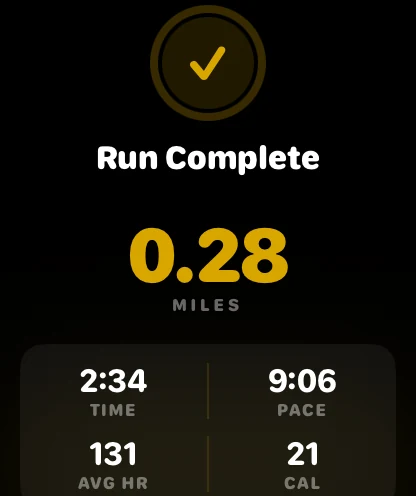
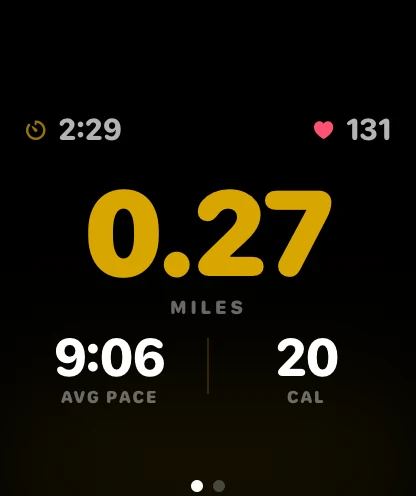
Every run has to arrive with GPS and heart rate recorded by an Apple Watch. A submission without watch heart-rate data is rejected by the server outright. GPS on its own is not enough, because a location-spoofing app can draw a flawless 10K and a bicycle can ride a real one — but producing 150 bpm for forty minutes while sitting down is a different proposition.
Runs also fail on a sub-4:00/mile pace floor, a heart rate outside 40–220 bpm, fewer than ten GPS points, a duplicate route, or a workout more than 24 hours old.
The cost of that strictness, stated plainly: it rules out every Android phone, every Garmin and every Fitbit, and treadmill runs the watch did not record. If a meaningful share of your club is not on an iPhone and an Apple Watch, this is the wrong app and Nike Run Club is the right one.
Most organisers have run one before and watched it fizzle. The pattern is consistent enough to plan around.
You run Race or Most Miles, the club’s fastest or least-busy member takes it three weeks running, and everyone else quietly stops entering. The challenge is technically alive and functionally over.
No settlement, no payout, no announcement — the leaderboard just stops. Nobody remembers who won the last one, which tells the club exactly how much the next one matters.
Collecting $20 from twelve people over Venmo, chasing the three who forgot, holding the float, then paying out. Do that twice and the organiser stops volunteering.
| Question | Answer |
|---|---|
| Who holds the buy-ins? | Stripe, from the moment a member joins until the challenge settles. Not RunMatch, and never the organiser. |
| When does it pay out? | Automatically when the challenge window closes. The pot lands in the winner’s RunMatch balance. |
| How fast to a bank? | Withdrawals via Stripe Connect, roughly 3–7 business days. |
| What does the club pay? | Nothing. 0% of the pot. The only fee is 3% when an individual withdraws winnings. |
| Who can take part? | Members aged 18 or over, on an iPhone with a paired Apple Watch. |
There is no club tier, no per-seat pricing and no organiser subscription, and that is not a launch promotion — it is the model. RunMatch makes money on the 3% withdrawal fee and on Pro, which only unlocks public matches against strangers. A club racing its own members never touches it.
It is worth comparing that with what changed elsewhere in 2026. Strava moved group challenges behind its subscription and requires one for every participant, not just the person who created it — a twelve-person club challenge now needs twelve subscriptions at $11.99 a month.
Checked 17 September 2026 against vendor pricing pages and help centres. Strava’s subscription requirement applies to the challenge creator and every athlete joining; a free trial also satisfies it.
The honest summary: Strava is the best social layer and now the most expensive way to run a club challenge. Nike Run Club is the best free option and genuinely good. RunMatch is the only one where the leaderboard pays out, and the only one that will refuse a run it cannot verify.
Run the first one over a single week. Monthly challenges work once a club has finished a weekly one together.
If your group is not a club yet, the run club guide covers finding members, picking a route and setting a weekly time — the parts that have nothing to do with an app.
The whole club stakes the same buy-in and runs. Race, Most Miles or Streak — the winner takes the entire pot, and RunMatch keeps none of it.
Members can also stake their own goals individually. Miss one and the money goes to someone they named, which turns a group chat into accountability.
Free to set up for any group from 2 to 200. 0% of the pot, verified on Apple Watch, paid out automatically.
Get RunMatch — run 1 mile, get $10One $10 first-mile reward per new account · 18+ · iPhone and Apple Watch required · Terms apply