Race your friends
Everyone starting from the couch puts in the same buy-in and races the block. Most miles over the eight weeks, or first to the distance, takes the pot.
Twenty-four sessions. The first one asks you to run for one minute at a time. The last one is a 10K. Every session is written out below — and there’s a 12-week version if eight weeks reads like a dare.
Free · no signup to read · 8-week and 12-week schedules
Mostly, yes — and the honest caveat matters more than the reassurance. Eight weeks works if you do all twenty-four sessions. It stops working the moment you miss a week, because there is no slack built into it. A 12-week plan has slack. That is the entire difference between the two, and it's why the 12-week version is further down this page rather than hidden on another one.
Here's the entry test. It takes about thirty seconds to answer honestly.
Three sessions a week, the same structure in each one, five minutes of walking to warm up and five to cool down on top. The bar beside each week is that week's session drawn to scale.
The weekly totals climb 24 → 27 → 50 → 75 → 90 → 95 → 110 minutes. Weeks 2 and 6 barely move, and that's deliberate: a plan that goes up every single week is a plan that ends in an injury around week five.
Same destination, four more weeks of runway. Week 2 repeats week 1 on purpose, the first continuous 20 minutes lands in week 6 instead of week 3, and the first 5K comes in week 9. If you're starting from genuinely no running, this is the one to take — the finish line doesn't care which plan got you there.
It means exactly what it says, and new runners get it wrong in exactly one way: they run the three minutes too fast. The run interval is not a sprint and it is not a test. It should feel like a pace you could hold for twice as long as you're being asked to.
The walk isn't a failure state either. It's the thing that lets you accumulate 25 minutes of running in week 4 when you could only manage 8 in week 1. Take the whole walk, every time, even on the day you feel good — especially on the day you feel good.
39 minutes of moving. 25 of them running. In week 1 the same 39 minutes contained 8 minutes of running — the walk is what carried you the rest of the way.
They're predictable, which means they're survivable. Both are the week a plan stops being intervals and starts being running.
Nine days ago you were running for 60 seconds at a time. Now the plan wants twenty continuous minutes, and the jump is real — weekly running time nearly doubles, from 27 minutes to 50.
About 35 minutes, continuous, and it's the first time the distance sounds like something other people do. This is also where the novelty has fully worn off and the weather has usually turned.
Most people finishing a couch-to-10K plan come in somewhere between 65 and 80 minutes. That's a pace of roughly 10:30 to 13:00 per mile, including any walking you do late in the race.
Now the part worth internalising: that number is the least interesting thing about your first 10K. You will never run a slower one. Every 10K after this is a personal best by definition, and the only way to lose that is to not finish this one.
Which is the entire reason the next section exists.
Don't increase your weekly running time by more than about 10% once you're past the interval weeks. This plan breaks its own rule once, at week 3, which is why week 3 gets a warning flag and why week 2 deliberately stands still.
Shin pain in a new runner is almost always volume, not form. It shows up when weekly minutes jump, when shoes are past their mileage, or when someone quietly adds a fourth running day because they felt good. If both shins hurt in the same place, take the volume back down a week — not to zero, just back a step. Pain in one leg, in one spot, that gets worse as you run is a different conversation and worth a physio.
The other half of the rule is the part nobody follows: the easy runs are supposed to be easy. Running your easy days at the pace you wish you could race is the single most common way a beginner plan ends in week five.
A plan on a fridge gets done more often than a plan in a browser tab. This page prints to a clean two-page schedule with the app chrome stripped out.
Here is the uncomfortable statistic behind every plan on this page: the failure point of a couch-to-10K plan is almost never fitness. It's week three, on a Tuesday, in the rain. The body is fine. The plan is fine. Nobody is watching.
RunMatch is a way to make someone watch. You stake your own money on completing the block — and if you miss it, that money goes to a recipient you chose in advance. Your training partner. Your sister. Not the house: RunMatch takes 0% of the pot.
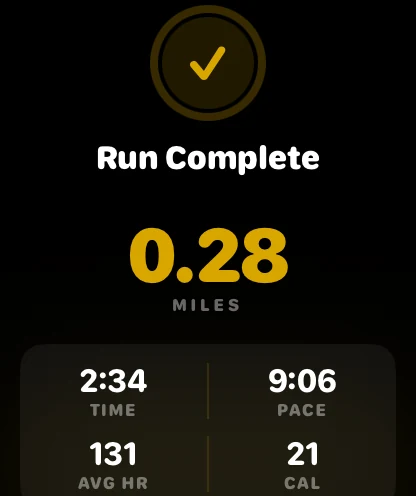
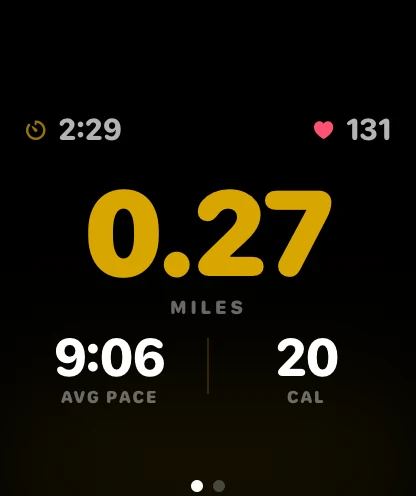
Free to download, free to race friends, 0% of the pot, 3% when you withdraw. Requires an iPhone and an Apple Watch — runs without Apple Watch heart-rate data are rejected outright.
Everyone starting from the couch puts in the same buy-in and races the block. Most miles over the eight weeks, or first to the distance, takes the pot.
Stake money on finishing all 24 sessions. Hit it and your stake stays yours. Miss it and it goes to a person you named in advance — never to us.
Same format on all of them: every session written out, free, printable, no email.
Print the plan and start Monday. Or stake a few dollars on finishing all eight weeks and give yourself a reason to go on the Tuesday it’s raining.
Get RunMatch — run 1 mile, get $10One $10 first-mile reward per new account · 18+ · iPhone and Apple Watch required · Terms apply