Race your friends
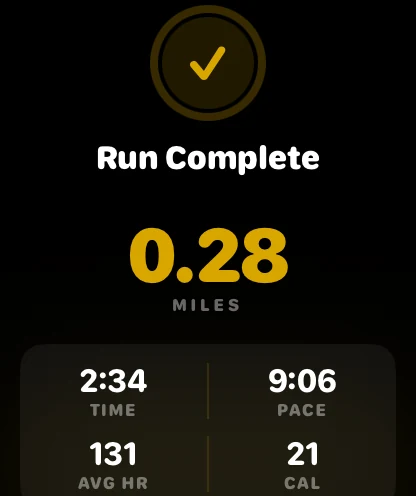
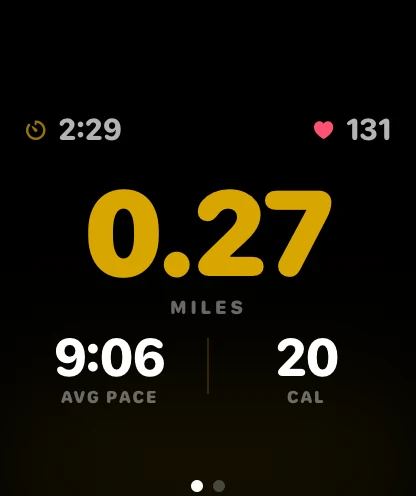
Find someone else going from 5K to 10K and race the block. Same buy-in each; most miles or first to the distance takes the pot.
Doubling your distance sounds like doubling your training. It is not. Only one run a week changes — the long one — and it climbs 3.5 miles to 6 across six weeks. Every session is written out below.
Free · no signup · printable · 18 runs, three days a week
Most people approach this backwards. They assume that because the race is twice as long, the training has to be twice as hard: more days, more speed, more everything. Then they add a fourth running day and a track session in the same fortnight, and week three is spent nursing a shin.
Going from 5K to 10K is a long-run problem. Your engine can already do the job — a 5K and a 10K are both aerobic efforts and you built that engine getting to 5K. What you do not yet have is the durability to keep going for another half hour, and durability comes from one progressively longer run a week. Nothing else.
So that is all this plan changes. Two easy runs stay exactly where they are, at the distance you already do comfortably. The third run gets longer each week: 3.5, 4, 5, 5 again, 6, then race. That is the whole method, and the discipline is in not doing more.
Same distance every week for all six weeks, at the same conversational pace you already run. They are not there to build fitness — they are there to keep it ticking over between long runs.
Up by roughly half a mile a week: 3.5, 4, 5, 5 again, 6, then race. This single session is doing all of the work.
That asymmetry is the whole plan, and it is why it takes six weeks rather than twelve. You are not rebuilding an engine you already have — you are extending how long it can run for, and that is a much smaller ask than most people assume.
Three runs a week. Two stay the same length the whole way through; only the long run moves.
The two easy runs never move. This is the only line on the chart that changes.
Weekly mileage runs 7.5 → 8.5 → 9.5 → 9.5 → 11.5 → race. Week 4 repeats week 3 deliberately — it is the consolidation week, and it is the one people skip because they feel good. Don’t.
Run the three sessions on any days that leave a rest day between each. Never put the long run the day after an easy run in the first three weeks.
Same destination, two more weeks of runway, and a genuine cutback in week 5 rather than a repeat. Take this one if your three runs a week are not yet a settled habit, or if you have had a niggle in the last couple of months.
The injury risk in this jump is real but it is narrow, and it comes from two specific mistakes.
Adding days and distance at the same time. Your heart and lungs adapt in two or three weeks; tendons, ligaments and bone take months. Increasing the long run is already asking the slow tissue for something new. Adding a fourth running day on top asks twice, and it is why shin pain shows up around week three in plans that do both.
Running the easy runs too fast. When the long run gets harder, the temptation is to prove fitness on the short ones. They are there to keep you ticking over between long runs, nothing else. You should be able to hold a full sentence out loud.
If something hurts on both legs in the same spot, take the long run back a week. Pain in one leg, one spot, worsening as you run, is a physio conversation rather than a training one.
There is a well-known formula for this — Riegel’s — and for the 5K-to-10K jump it works out almost exactly as your 5K time × 2.08. Not double: slightly more than double, because you cannot hold 5K pace for twice the distance.
| Your current 5K | Predicted 10K | Realistic first-10K target |
|---|---|---|
| 20:00 | 41:36 | about 41–42 minutes |
| 25:00 | 52:00 | about 52–53 minutes |
| 30:00 | 62:24 | about 62–64 minutes |
| 35:00 | 72:48 | about 73–75 minutes |
| 40:00 | 83:12 | about 83–86 minutes |
Treat the middle column as a ceiling and the right-hand one as the plan. A first 10K run at predicted pace usually turns into a difficult last two miles, because the prediction assumes you are equally trained for both distances and after six weeks you are not quite.
The more useful target for a first 10K is a negative split — second half faster than the first. Almost nobody manages it, and the ones who do finish feeling strong rather than surviving.
Six weeks of training can be undone in the first mile, and almost always is.
No fuelling needed. A 10K finishes inside what your body already has stored — gels are a 10-mile and half-marathon problem.
On the time: it will be somewhere near the prediction above and it genuinely does not matter. You will never run a slower 10K than your first one, which makes every future attempt a personal best by definition. The only way to lose that is not to finish this one.
Take a full easy week first. Then pick a direction, because chasing distance and speed at the same time is how people end up with neither.
Longer. Ten miles is the natural next step and is under-rated — the 10-mile plan takes eight weeks from the base this block leaves you with, and it is where fuelling starts to matter. After that the half marathon plan wants three continuous miles as an entry test, which you will comfortably have.
Faster. Getting quicker at 10K means adding one quality session a week rather than more miles. The 10K training plans hub covers what tempo runs and intervals actually are, and what paces to run them at.
Eighteen runs is easy to hold in your head and easy to drift out of. The printed version strips the site chrome and fits on one page.
Six weeks is short enough that nobody quits from exhaustion. They quit from drift — a missed long run in week 2, another in week 3, and suddenly the plan is notional.
RunMatch is one way to stop the drift. Stake your own money on finishing all 18 runs, and if you miss, it goes to a recipient you named in advance rather than to us — RunMatch takes 0% of the pot. Or find someone else bridging to their first 10K and race them through it.
Free to download, free to race friends, 0% of the pot, 3% when you withdraw. Requires an iPhone and an Apple Watch. The plans above are free either way.
Find someone else going from 5K to 10K and race the block. Same buy-in each; most miles or first to the distance takes the pot.
Or stake your own money on all 18 runs. Hit it and nothing moves. Miss it and it goes to the person you named.
Same format on all of them: every session written out, free, printable, no email.
Print the plan and start Monday. Only one run a week changes — that is the whole trick.
Get RunMatch — run 1 mile, get $10One $10 first-mile reward per new account · 18+ · iPhone and Apple Watch required · Terms apply