11 Best Running Apps of 2026 (August Update)
Ten of these track, coach or map your runs. One puts money on them, so you race friends for the pot or bet on your own goal. That one's ours.
- 11 apps, sorted by what they do best
- One of them pays you to run
Two ways to put money on your runs
Race your friends
Buy in with your friends and run. Most miles, first to the distance or the longest streak wins the pot.
Bet on yourself
Put money on a goal, like 3 miles by 6 PM. Hit it and keep your stake. Miss it and it goes to a friend you picked.
- $21average one-day win
- $740biggest pot so far
- $10for your first verified mile
The categories that matter
There are hundreds of running apps. Most of them are just step counters with extra steps. After testing the ones that actually matter, here are the 11 worth your phone storage in 2026, organized by what they actually do best — not by how good their App Store screenshots look.
Running apps mostly fall into five buckets:
The right app for you depends on which category matters most. Most runners end up using 2–3 apps that complement each other.
The 11 apps at a glance
1. Strava — Best for tracking + community
Still the king. If you only download one running app, this is it. Strava's GPS tracking is excellent, the community feed is genuinely motivating, and segments turn every regular run into a potential PR attempt. Free version covers tracking and the feed; the subscription ($11.99/month or $79.99/year) adds training analysis, route planning, heart rate zones — and, as of 2026, group challenges with friends, which now require a subscription to create or join.
Best foranyone who runs outdoors and wants their data tracked + a community to share with.
2. Nike Run Club — Best for guided runs
Nike's app is free and shockingly good. The guided audio runs (with coaches like Coach Bennett) feel like a friend running with you. Training plans are well-structured for 5K, 10K, half, and full marathon. Tracking is reliable, though not as data-rich as Strava.
Best forbeginners and intermediates who want audio coaching and guided structure.
3. Garmin Connect — Best if you have a Garmin watch
If you wear a Garmin, this is your hub. The training analysis is the most sophisticated of any free app — VO2 max estimates, training load, recovery metrics, race predictions. The interface is clunky but the data is unmatched.
Best forserious runners with a Garmin device who want detailed training metrics.
4. Runna — Best for adaptive training plans
Runna ($19.99/month or $119.99/year) builds personalized training plans for any race goal, then adapts them weekly based on how you're performing. The plans actually feel custom — pace targets, workout structure, and recovery weeks all calibrated to you. Excellent integration with Strava and Garmin.
Best forrunners training for a specific race who want a coach-quality plan without paying for a coach.
5. RunMatch — Best for accountability with friends
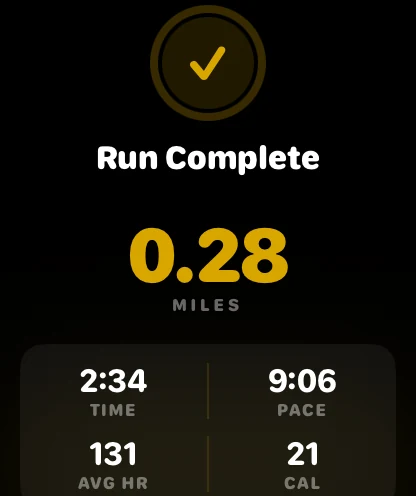
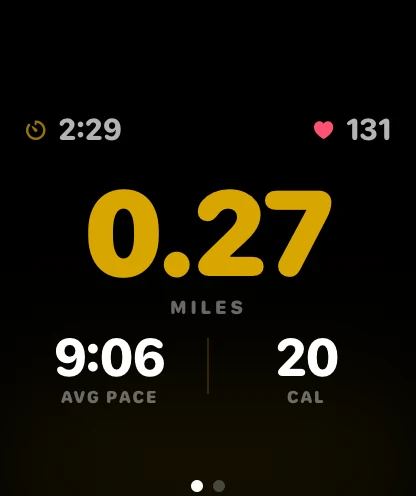
OursFull disclosure: this one is ours. We build RunMatch, so read this entry as the makers describing their own app — the mechanics below are factual, the ranking is obviously biased. RunMatch turns running into a real-money competition with friends. Three formats: Race (first to a distance), Most Miles (highest total by the deadline), Streak (daily target). Buy-ins, automatic payouts via Stripe. Runs are verified on Apple Watch, GPS plus heart rate, so nobody fakes miles. You can also put money on your own goal: miss it and the stake goes to a friend you picked. If you're wondering whether the money side is on the level, we answer that directly on Is RunMatch legit?, and you can run the pot math yourself.
Best forrunners who want stakes-based accountability — group chats, run clubs, friends who keep talking trash about who's faster. New accounts get $10 for their first verified mile. If money-on-the-line is the part that interests you, we compared every app that pays (or charges) runners — with real payout numbers — in Get Paid to Run: what the apps actually pay.
6. Runkeeper (ASICS) — Best free Strava alternative
If Strava feels overkill or you don't want the social pressure, Runkeeper is a clean, no-frills tracking app. Owned by ASICS now. Solid GPS, decent training plans, ad-free with the optional subscription.
Best forsolo runners who want tracking without the Strava social layer.
7. MapMyRun — Best for route discovery
Owned by Under Armour. Where MapMyRun shines is its route library — you can find user-mapped routes anywhere in the world, filter by distance and elevation. Tracking is functional but not the focus.
Best fortravelers and runners exploring new cities.
8. Couch to 5K (NHS or others) — Best for absolute beginners
Multiple versions of Couch to 5K exist (the NHS one is free and great). The 9-week walk-run progression is genuinely effective at building a running habit from scratch. Audio cues tell you when to walk vs. run.
Best foranyone who's never run before or hasn't run in 5+ years.
9. AllTrails — Best for trail runners
Not technically a running app, but if you trail run, AllTrails is essential. Trail conditions, elevation profiles, GPS download for offline use. The user-uploaded photos and reviews tell you what to expect before you commit to a remote route.
Best fortrail runners and hybrid road/trail runners.
10. Zwift Run — Best for treadmill running
Zwift's running version. You connect a foot pod or smart treadmill and run in virtual worlds with other people running treadmills around the globe. Sounds weird, works surprisingly well for staying motivated indoors.
Best forwinter runners stuck on the treadmill, or anyone who hates indoor running and needs distraction.
11. Pacer — Best for casual fitness tracking
If you're not a "real" runner yet but want to start moving, Pacer counts steps, tracks walks, and gradually nudges toward more activity. Less intimidating than Strava for someone just getting started.
Best forpeople transitioning from sedentary to active.
What you actually need
Most runners over-complicate this. You probably need:
- Strava for tracking + social — non-negotiable for most runners
- One coaching/training app if you have a goal race — Runna, Nike Run Club, or your Garmin
- One accountability layer if motivation is your problem — RunMatch, a run club's Strava group, or just a training partner
That's three apps. Anything more and you'll spend more time logging than running.
The real question: what's your bottleneck?
The "best" running app depends on what's actually stopping you from running:
- If you can't make yourself go → accountability app (RunMatch, training partner via Strava)
- If you don't know what to run → coaching app (Runna, Nike Run Club, Garmin)
- If you're bored running → community app (Strava, Zwift Run)
- If you're injured or new → beginner app (Couch to 5K)
Match the tool to the bottleneck. The runner with five apps and no consistent runs has too many tools and not enough structure. The runner who picks the right one and uses it daily ends up faster than the over-equipped one every time.
Written by the RunMatch team. We build RunMatch, entry #5 on this list, and say so wherever it comes up.
Looking for accountability that actually works?
Race your friends for a real pot, or put money on your own goal. Your first verified mile pays $10, and every run is verified on Apple Watch.
Get RunMatch on iOS- Payments via Stripe
- GPS + heart rate on Apple Watch
- Withdrawals via Stripe Connect
One $10 first-mile reward per new account · 18+ · iPhone and Apple Watch required · Terms apply